Indica Dominant · Dutch Passion
Skywalker
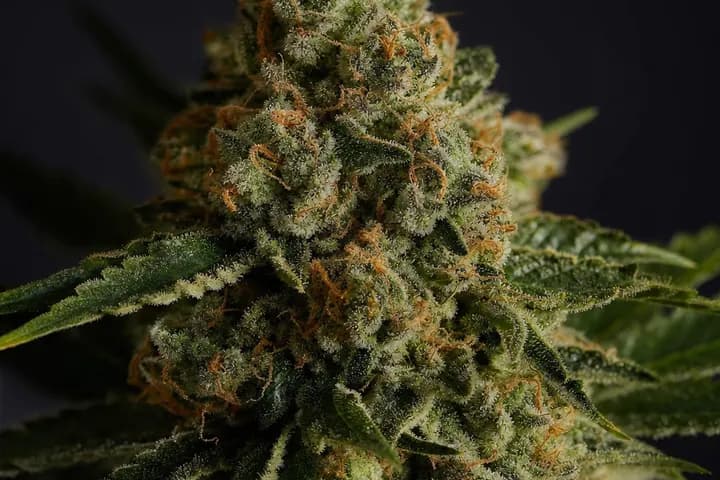
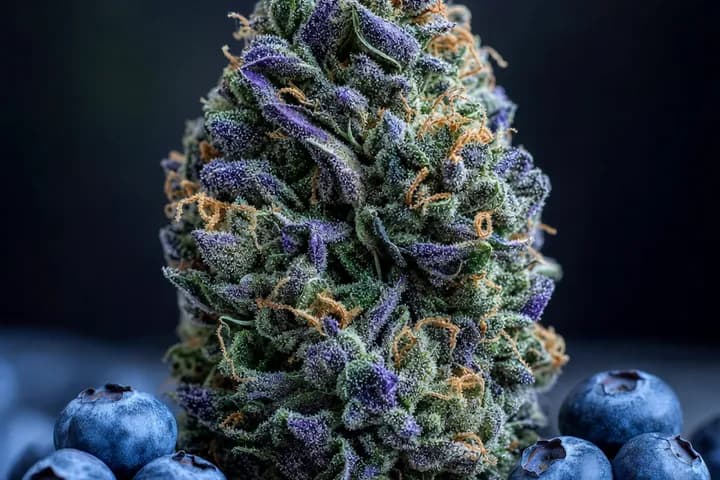
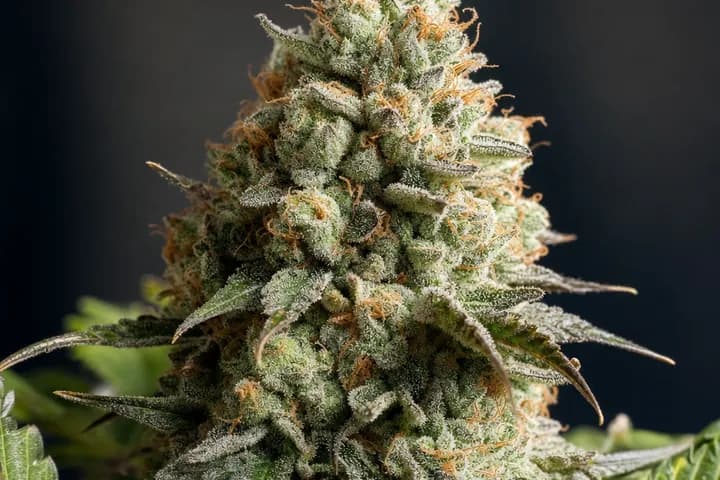
Skywalker is the Dutch Passion indica-leaning cross of Blueberry and Mazar released in the late 1990s, predating the more famous Skywalker OG by roughly a decade and built on a different genetic background entirely. The Blueberry parent contributes sweet berry and fruit terpenes while the Mazar parent — itself an Afghan-Skunk hybrid — provides Afghani indica structure, dense bud formation, and resin production. The plants finish in roughly eight weeks indoors with manageable stretch and an indica-dominant high that leans relaxed and lightly euphoric rather than the heavy sedation associated with OG-family Skywalker. Dutch Passion has carried Skywalker continuously since release, making it one of the longer-running indica hybrids in the European catalogue and a regular benchmark for berry-leaning Mazar crosses. Growers who already have the Skywalker OG cut should treat the Dutch Passion Skywalker as a separate strain with a different lineage and a noticeably lighter effect profile.
Reviewed 2026-05-23· Sources: seedfinder.eu, Dutch Passion catalogue
Potency
- THC range
- 18–22%
- Typical THC
- 20%
- CBD
- up to 0.3%
Flowering
- Indoor weeks
- 8–9 wk
- Difficulty
- Easy
- Climate
- temperate, Mediterranean, indoor
Yield & size
- Indoor
- 425-525 g/m²
- Outdoor
- 450-650 g/plant
- Height
- 100-140 cm
Indica / sativa ratio
Terpene profile
The aromatic compounds below shape how Skywalker smells, tastes, and ultimately feels in the body.
- dominant
Myrcene
Sedating, musky, herbal — commonly linked to couch-lock effects.
- secondary
Caryophyllene
Peppery and spicy — the only terpene that binds CB2 receptors, studied for anti-inflammatory action.
- secondary
Linalool
Floral and lavender-like — calming, often noted for sleep and anxiety support.
- minor
Limonene
Uplifting citrus — typically associated with mood elevation and stress relief.
Reported side effects
Lineage
Skywalker traces to Blueberry × Mazar. The cross sits in the Blueberry x Mazar family, which influences both the terpene profile and the flowering structure described above.
Genetic family tree
Documented parents for Skywalker based on breeder catalogues. Library entries are clickable; ancestors not yet documented on this site appear in a lighter, non-linked box.
Strains crossed with Skywalker
Skywalker is a parent of 2 strains in the broader catalogue. These are crosses that carry Skywalker genetics on at least one side of the cross.
Grow profile
Grow profile
- Indica / sativa
- 75% / 25%
- Flowering days
- 56–63 days
- Stretch
- Moderate
- Pest resistance
- High
- Mold resistance
- Moderate
- Training methods
- topping, lst, scrog
Feed schedule for Skywalker
These EC and NPK targets are starting points calibrated for the strain's Indica lean and easy difficulty rating — not gospel. Drop 15-20% off any EC ceiling on your first run and let the plant tell you where it actually wants to feed.
Suggested feed schedule
- Late veg
- 1.1-1.3 EC
- Early flower
- 1.2-1.4 EC, NPK 2-3-4
- Mid flower
- 1.5-1.7 EC, NPK 1-4-6
- Late flower
- 1.3-1.5 EC
- Final week
- Plain pH-balanced water for the last 5-7 days.
Full breakdown of feed math, runoff testing, and salt buildup in our nutrient guide.
What to expect through the grow cycle
Skywalker is documented with a 9-week flower and a compact stretch typical of indica-leaning structure. The visual below maps a documented 13-week cycle built from 4weeks of vegetative growth and the strain's published flowering window.
Published grow reports for Skywalker concentrate the most observational notes on the late-flower ripening window. This timeline is descriptive — it reflects what reports document, not a how-to. Actual week-to-week behaviour varies with phenotype, light intensity, pot size, and environment.
Phase details
- Veg (weeks 1-4)
- The documented vegetative period for Skywalker. Plants establish root structure, leaf canopy, and node count before flower triggering, with a easy difficulty rating shaping how forgiving the early canopy work tends to be.
- Stretch (weeks 5-7)
- Skywalker is documented as having moderate stretch. Reports describe the plant roughly doubling in height during this phase as the indica-leaning structure establishes its final flowering frame.
- Bud sites (weeks 8-9)
- Pre-flowers form at the nodes and calyxes begin to develop. Grow reports for Skywalkernote this as the window where the canopy's eventual bud distribution becomes visible.
- Bud development (weeks 10-11)
- Flowers thicken and calyxes fatten through this phase. Documented Skywalker runs show the bulk of visible flower mass accumulating here, with resin production accelerating toward the end.
- Ripening (week 12)
- Trichomes transition from clear toward cloudy and amber. Reports for Skywalker describe the Myrcene-led terpene profile maturing through this window, with aroma sharpening week over week.
- Final (week 13)
- Calyx swelling is documented as complete and the harvest window opens. Published Skywalker runs end here, within the 8-9 week flowering range reported by the breeder.
Flavor & aroma
Reported effects
Common questions about Skywalker
Is Dutch Passion Skywalker the same as Skywalker OG?
No — Dutch Passion's Skywalker crosses Blueberry and Mazar and predates Skywalker OG by roughly a decade. Skywalker OG is a Skywalker x OG Kush hybrid built later by California breeders, with a heavier sedative profile and OG-family terpenes rather than the berry-leaning Mazar expression.
How does Skywalker compare to its Blueberry parent?
Skywalker finishes faster than pure Blueberry — about eight weeks versus nine to ten — and produces denser, more resinous buds thanks to the Mazar Afghani input. The berry terpene profile is similar but tempered by Mazar's earth-and-spice undertones.
Breeder of record
Dutch Passion
View breeder profile and other strains →
More from Dutch Passion


Strains similar to Skywalker
These picks lean on the same terpene profile and parent genetics as Skywalker — shared dominant terps, overlapping lineage, and matching indica/sativa lean. No star ratings or popularity contests, just overlap on the traits that actually drive a similar grow and smoke.